

When You Buy Local, Where Does the Money Actually Go?
by Kali Gilbert, Blue Ridge Cattle Co.
February 1, 2026

When families choose a local product, whether it is beef, produce, eggs, or honey, it often feels like a simple decision about food quality. In reality, that purchase has a much wider impact. Economically,
the transaction does not stop at the farm gate. It begins a chain of spending that moves through the community in measurable ways. Economists refer to this as the local economic multiplier effect. It describes how a single dollar spent locally can circulate through multiple businesses and households before it leaves the area. National research consistently shows that local and regional food systems tend to keep more money close to home than conventional supply chains.
The first impact of a local purchase is on the farm itself. When consumers buy directly from a producer, a larger share of the food dollar stays with that business. Unlike national supply chains that rely on multiple intermediaries, local farms often operate with shorter and more direct market channels. That allows producers to reinvest more of their income locally.
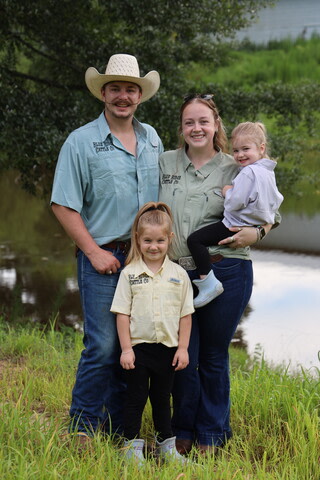
Farm spending supports a wide network of local and regional businesses. Feed suppliers, veterinarians, equipment dealers, fuel providers, processors, and service technicians are all part of the same economic system. When farms are financially stable, these businesses benefit as well.
National studies supported by the U.S. Department of Agriculture show that local food systems also support more jobs per dollar of sales than non local food markets. Some analyses estimate that farms selling through local channels generate roughly four times more full time jobs per million dollars in revenue compared to farms selling exclusively into national or global supply chains. Those jobs matter because farm income becomes household income. When farm families and employees are paid, that money is spent on everyday needs such as groceries, childcare, healthcare, transportation, and housing. It also supports school activities, youth programs, and community services. This household spending represents the second and third waves of the ripple effect.
Economic multiplier research helps quantify this process. National data from studies of local food systems suggest that every one dollar spent on local food can generate up to two dollars in total economic activity once indirect and induced effects are included. While results vary by region, the underlying principle remains consistent. Money spent locally is more likely to circulate longer within the community.
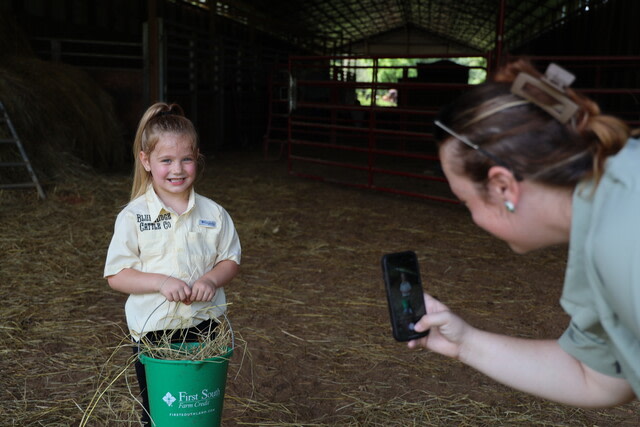
When families support our local farm, it allows us to reinvest directly back into our community in real and personal ways. The dollars spent on our beef help cover feed from local suppliers, veterinary care from nearby clinics, fuel and equipment services from small businesses, and processing through local facilities. That income also supports our family. It helps pay for our kids’ school fundraisers, gymnastics, piano lessons, tee ball, and the everyday expenses that come with raising a family right here at home. Supporting our farm does not just support food production. It supports the people, businesses, and families that make our community thrive.
It is important to be clear about what buying local can and cannot do. Purchasing local food does not replace national food systems, nor does it guarantee the same level of economic impact in every community. Outcomes depend on infrastructure, supply chain connections, and whether supporting businesses are truly embedded in the local economy. However, national research shows that even modest shifts in consumer behavior can have meaningful effects when repeated across many households. Buying some portion of food locally strengthens economic resilience without requiring families to change how they shop entirely.
At its core, buying local is an economic choice as much as it is a food choice. Research backed evidence shows that local food spending supports jobs, generates additional economic activity, and reinforces the communities where families live and work. One purchase may seem small, but when multiplied across a community, those decisions help shape long term economic stability.
Learn more about Blue Ridge Cattle Co. in Cullman here.
The views and opinions expressed in this blog are those of the authors and do not necessarily reflect the views or positions of Sweet Grown Alabama.